
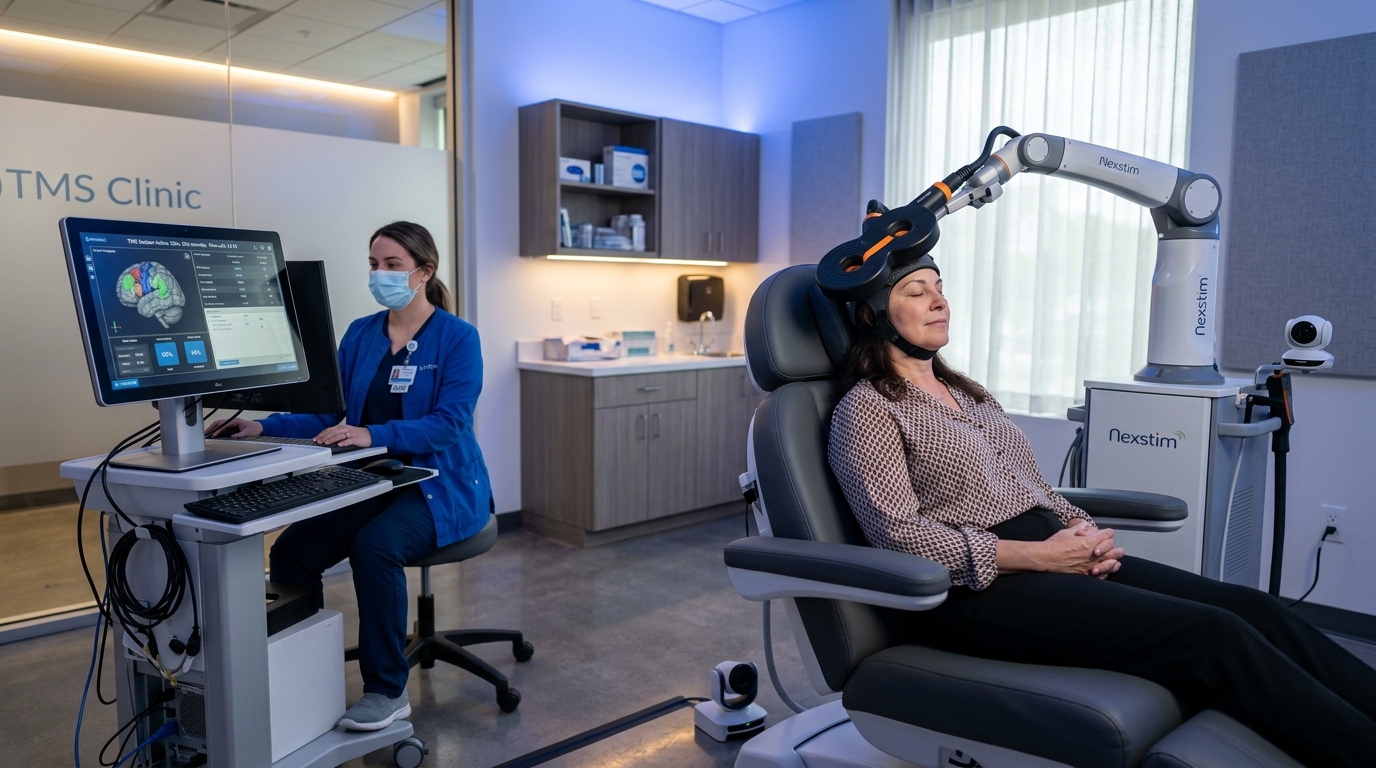
A Gentle, Targeted Approach to the Brain
Understanding the physics, neuroscience, and clinical indications of Transcranial Magnetic Stimulation (TMS).
Electromagnetic Neurostimulation & Neuroplasticity
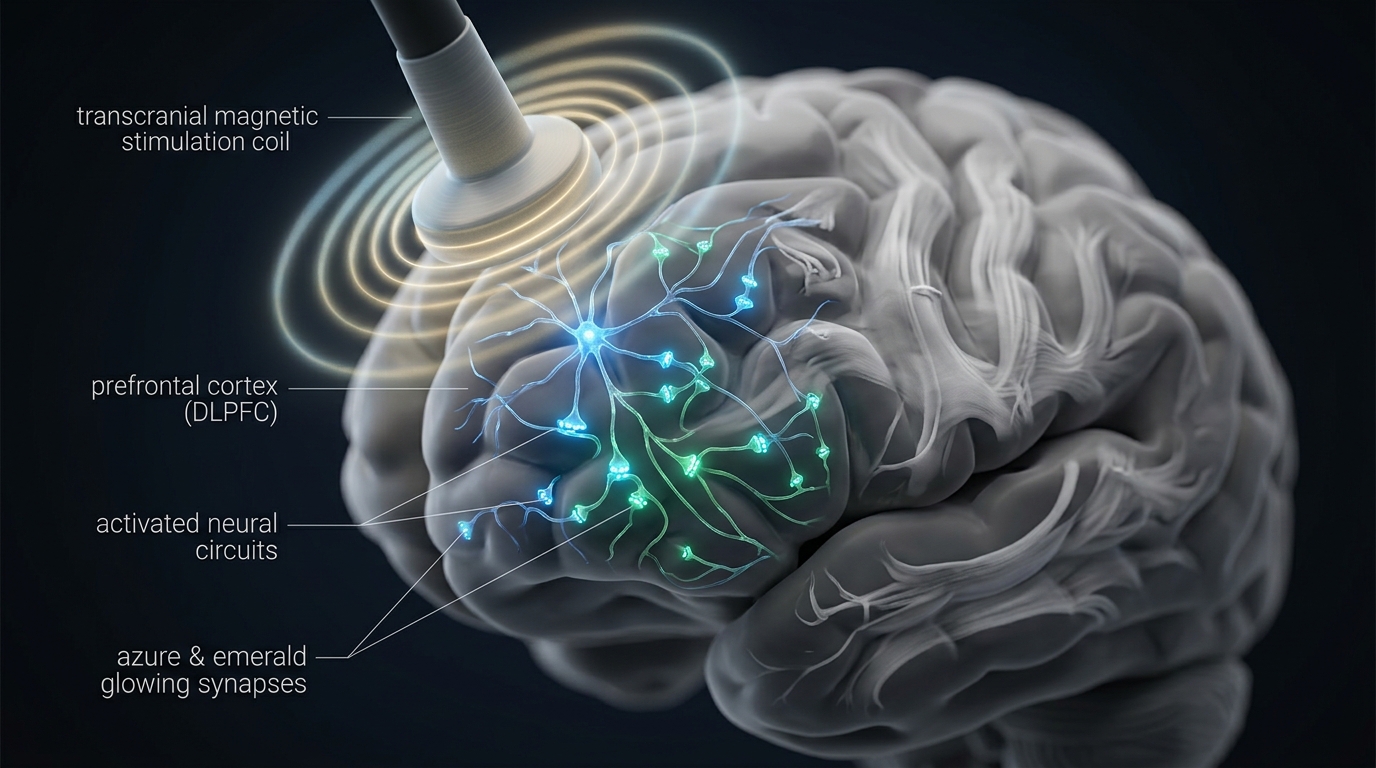
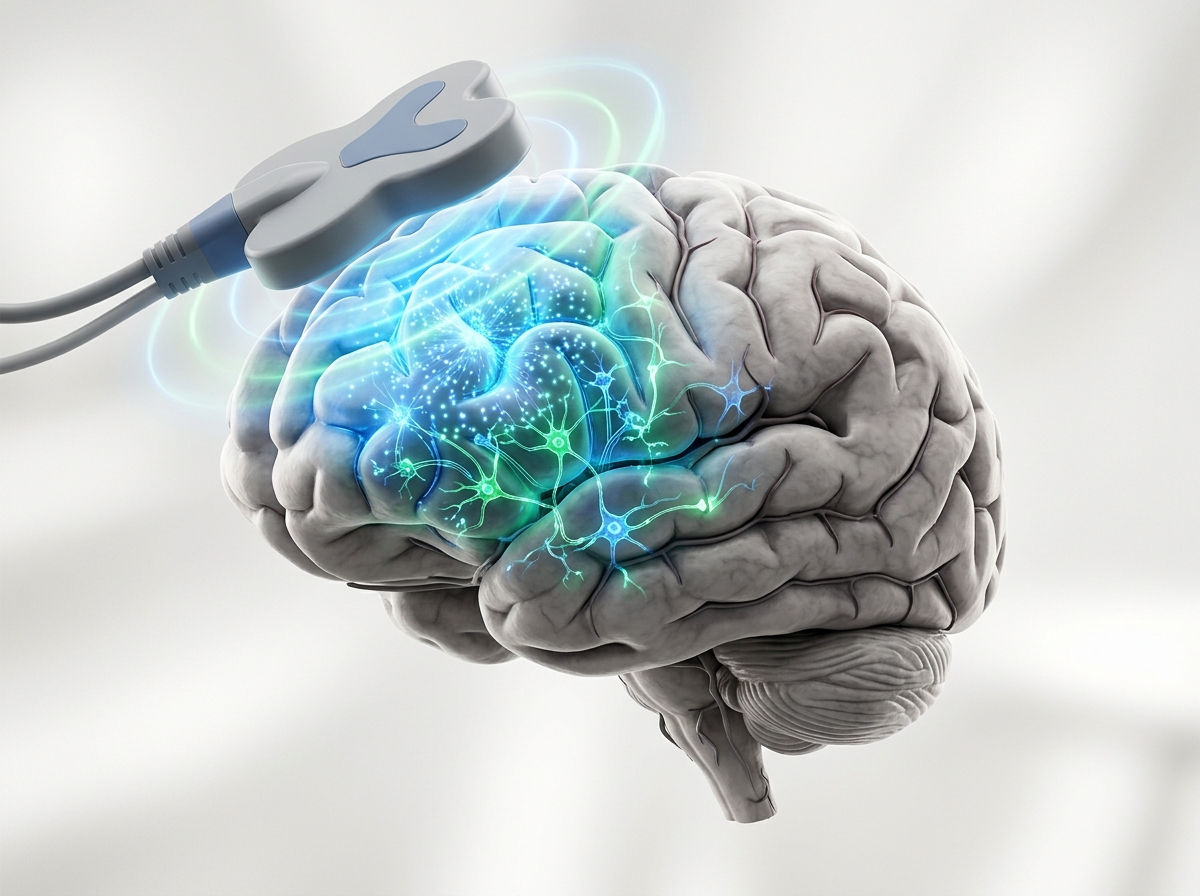
Transcranial Magnetic Stimulation operates on the fundamental medical physics principle of electromagnetic induction discovered by Michael Faraday. A specialized electromagnetic coil placed against the scalp generates alternating magnetic fields that pass effortlessly through hair, skin, and skull bone without resistance or sensation.
When these magnetic pulses reach the cerebral cortex, they induce brief, localized electrical micro-currents. These micro-currents depolarize cortical neurons, stimulating them to fire and release vital neurotransmitters including serotonin, dopamine, and norepinephrine.
Over a multi-week treatment course, repeated targeted stimulation produces lasting Long-Term Potentiation (LTP) — the biological basis of neuroplasticity. The brain literally rewires underactive mood networks, re-establishing resilient cognitive control.
Clinical Treatment Parameters & Indications
Select an indication below to review its neuro-anatomical target, stimulation frequency, session duration, and clinical evidence.
Major Depressive Disorder (MDD)
Depression is biologically characterized by hypometabolism in the Left Dorsolateral Prefrontal Cortex (L-DLPFC). When this area goes dormant, patients experience persistent despair, cognitive fog, emotional numbness, and an inability to experience joy (anhedonia).
Our high-frequency (10Hz) excitatory protocol stimulates the L-DLPFC, restoring metabolic blood flow and normal neurotransmitter equilibrium. Over 70% of patients who failed to improve on traditional medications achieve meaningful clinical response, with approximately 50% reaching complete remission.
Inquire About Depression ProtocolDepression Treatment Parameters
- • Target: Left Dorsolateral Prefrontal Cortex (DLPFC)
- • Protocol: High-frequency (10Hz) or iTBS (theta burst)
- • Session Duration: 19 to 30 minutes
- • Course Duration: 30 to 36 sessions (5 days/week)
- • Suitability: Treatment-resistant depression, medication intolerance
Generalized Anxiety & Panic Disorders
Severe anxiety is driven by hyperarousal of the limbic system, particularly the amygdala, accompanied by an overactive right prefrontal cortex. Patients experience racing thoughts, physical tension, insomnia, and pervasive dread.
We employ a low-frequency (1Hz) inhibitory protocol applied to the Right DLPFC. This gently dampens hyperactive threat-detection circuits, restoring calm and reducing somatic panic symptoms without the sedative cloud of benzodiazepines.
Inquire About Anxiety ProtocolAnxiety Treatment Parameters
- • Target: Right Dorsolateral Prefrontal Cortex (R-DLPFC)
- • Protocol: Low-frequency (1Hz) inhibitory stimulation
- • Session Duration: 20 to 25 minutes
- • Course Duration: 25 to 30 sessions
- • Suitability: GAD, panic disorder, comorbid anxiety with depression
Obsessive-Compulsive Disorder (OCD)
OCD involves hyper-synchronized firing in the Cortico-Striato-Thalamo-Cortical (CSTC) loop, trapping patients in distressing intrusive obsessions and repetitive neutralizing compulsions.
Using specialized targeted stimulation coils, TMS modulates anterior cingulate and medial prefrontal regions. Delivered in conjunction with personalized symptom provocation protocols, TMS significantly reduces obsessive symptom severity on the Y-BOCS scale.
Inquire About OCD ProtocolOCD Treatment Parameters
- • Target: Medial Prefrontal Cortex / Anterior Cingulate
- • Protocol: 20Hz high-frequency deep modulation
- • Session Duration: 20 minutes
- • Course Duration: 29 to 30 sessions
- • Suitability: Refractory OCD, SSRI-resistant symptoms
Chronic Neuropathic Pain & Tinnitus
Centralized pain disorders and intractable tinnitus represent neural network maladaptations — "phantom pain" and "phantom sound" generated by hyperactive sensory cortices.
By targeting the Primary Motor Cortex (M1) or Temporoparietal junction, TMS activates descending inhibitory pain pathways, offering non-opioid, non-surgical relief for chronic neuropathic conditions.
Inquire About Pain ProtocolPain & Tinnitus Parameters
- • Target: Primary Motor Cortex (M1) or Auditory Cortex
- • Protocol: High-frequency pain-gating modulation
- • Session Duration: 20 to 30 minutes
- • Course Duration: 20 to 30 sessions
- • Suitability: Neuropathic pain, fibromyalgia, refractory tinnitus
TMS vs. Medications vs. Electroconvulsive Therapy
Review the clinical evidence comparing Transcranial Magnetic Stimulation against traditional pharmaceutical and electrical interventions.
| Clinical Feature | TMS Therapy (UPPS Wellness) | Antidepressant Medications | Electroconvulsive Therapy (ECT) |
|---|---|---|---|
| Invasiveness | Non-Invasive (Outpatient) | Non-Invasive (Oral) | Invasive (Hospital Inpatient) |
| Anaesthetic / Sedation | None Required (100% Awake) | None | General Anaesthetic & Muscle Relaxant |
| Systemic Side Effects | Zero (No weight gain, nausea, sexual dysfunction) | Common & Often Severe | Frequent cardiovascular & physical strain |
| Cognitive / Memory Impact | Pro-Cognitive (Improves memory & clarity) | Can cause emotional blunting & brain fog | Significant risk of acute & retrograde memory loss |
| Post-Treatment Activity | Immediate resumption (Drive yourself home) | Daily continuous dosage | Requires escort home & 24h+ recovery downtime |
| Mechanism | Targeted electromagnetic cortical stimulation | Broad chemical bloodstream distribution | Generalized induced cerebral seizure |
Who Can Safely Receive TMS?
TMS has an exceptionally high safety profile documented across hundreds of thousands of treatment sessions worldwide. Because it is non-systemic, there are no medication interactions or organ burdens.
Absolute Contraindications
The only absolute contraindication is the presence of non-removable metallic or electronic implants situated within 30cm of the treatment coil, including metallic aneurysm clips, cochlear implants, and implanted brain stimulators.
What is Completely Safe
Dental fillings, dental braces, titanium implants, cardiac stents, and joint replacements below the neck are completely safe and do not interfere with TMS.
Clinical Side Effect Profile
Mild Scalp Sensitivity: Some patients note a light tingling or mild tension headache during the initial 3-4 sessions, which typically resolves spontaneously or responds to standard over-the-counter paracetamol.
No Cognitive Deficits: Decades of testing confirm TMS does not impair memory, concentration, or intelligence.
Extremely Low Seizure Risk: Less than 0.1% per course — comparable to or lower than the seizure risk of many standard antidepressant medications.